Electronic Signature Vs Digital Signature Explained
Businesses and individuals increasingly rely on electronic documents to manage contracts, agreements, invoices, and official records. Instead of printing, signing, scanning, and mailing paperwork, people now complete these tasks online in just a few minutes. Two common methods used to sign electronic documents are electronic signatures and digital signatures.
Although these terms are often used interchangeably, they are not the same. Both allow documents to be signed electronically, but they differ in technology, security, verification methods, and intended use.
Understanding these differences helps businesses choose the right signing method for contracts, legal agreements, financial records, healthcare documents, and other important files.
This guide explains electronic signatures and digital signatures, how they work, their benefits, legal recognition, and when to use each one.
What Is An Electronic Signature?
An electronic signature, often called an e-signature, is any electronic method used to indicate agreement or approval on a digital document.
Unlike handwritten signatures on paper, an electronic signature exists in digital form. It can be as simple as typing your name into a form or clicking an “I Agree” button.
Common examples include:
- Typing your name
- Drawing your signature with a mouse
- Signing using a touchscreen
- Uploading a scanned signature
- Clicking an acceptance checkbox
- Using a stylus on a mobile device
Electronic signatures are designed to simplify document signing and reduce paperwork.
What Is A Digital Signature?
A digital signature is a more advanced and secure type of electronic signature.
It uses encryption technology, digital certificates, and Public Key Infrastructure (PKI) to verify the identity of the signer and protect the integrity of the document.
When a document is digitally signed, the software creates a unique encrypted code linked to both the document and the signer.
If anyone changes the document after signing, the digital signature becomes invalid.
This provides strong protection against tampering and fraud.
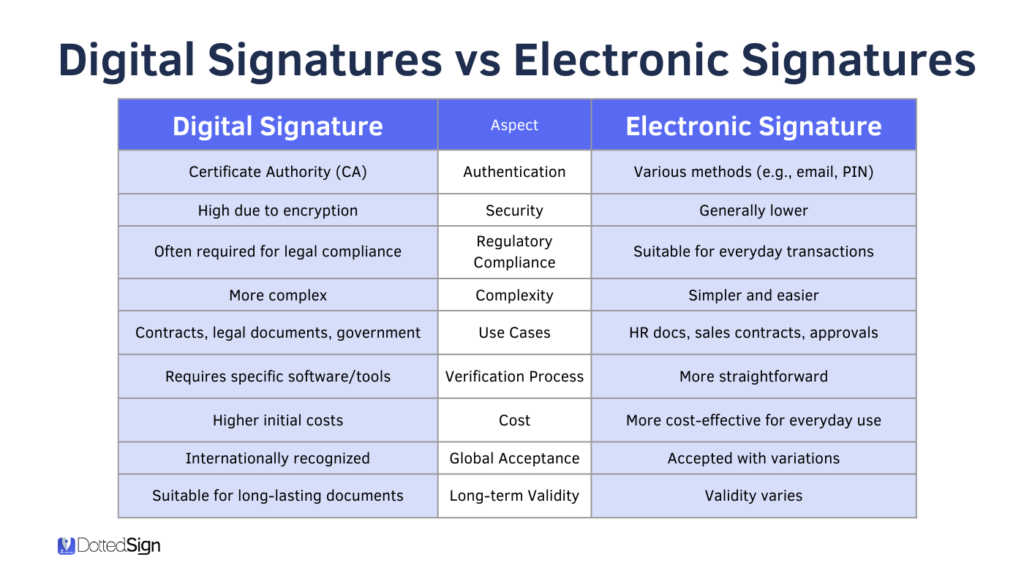
Electronic Signature Vs Digital Signature
Although both methods allow electronic document signing, they differ in several ways.
Purpose
Electronic signatures are primarily used to indicate consent or approval.
Digital signatures provide both approval and document security.
Technology
Electronic signatures use simple electronic methods such as typing, drawing, or clicking.
Digital signatures use advanced encryption and cryptographic algorithms.
Identity Verification
Electronic signatures may require minimal identity verification.
Digital signatures rely on digital certificates issued by trusted Certificate Authorities to verify the signer’s identity.
Security
Electronic signatures offer basic protection.
Digital signatures provide strong authentication, encryption, and tamper detection.
Document Integrity
Electronic signatures usually do not detect changes made after signing.
Digital signatures immediately reveal if the document has been modified.
Authentication
Electronic signatures confirm agreement.
Digital signatures verify both identity and document authenticity.
How Electronic Signatures Work
The electronic signing process is straightforward.
Step 1
Upload a document to an electronic signature platform.
Step 2
Add signature fields.
Step 3
The signer enters or draws their signature.
Step 4
The document is saved.
Step 5
The completed document is shared with all parties.
The process usually takes only a few minutes.
How Digital Signatures Work
Digital signatures involve additional security steps.
First, the document is converted into a unique mathematical value called a hash.
The software encrypts this hash using the signer’s private key.
A digital certificate is attached to the signed document.
When another person opens the file, their software uses the public key to verify the encrypted hash.
If the newly generated hash matches the original, the document remains authentic.
If not, the software alerts the recipient that the file has changed.
Key Features Of Electronic Signatures
Electronic signatures offer several useful features.
- Quick document approval
- Remote signing
- Mobile device compatibility
- Easy document sharing
- Reduced paperwork
- Faster workflows
- Lower administrative costs
- Improved customer experience
These features make electronic signatures popular for everyday business operations.
Key Features Of Digital Signatures
Digital signatures include everything electronic signatures offer while adding stronger security.
Important features include:
- Encryption
- Identity verification
- Digital certificates
- Tamper detection
- Document integrity
- Non-repudiation
- Secure verification
- Compliance support
These capabilities make digital signatures suitable for sensitive documents.
Benefits Of Electronic Signatures
Electronic signatures help organizations improve efficiency.
Major benefits include:
Faster Processing
Documents can be signed within minutes.
Cost Savings
Businesses reduce expenses related to paper, printing, and mailing.
Convenience
Documents can be signed from almost anywhere.
Better Collaboration
Multiple parties can sign documents remotely.
Improved Customer Satisfaction
Customers no longer need to visit offices to complete paperwork.
Benefits Of Digital Signatures
Digital signatures provide additional advantages.
Strong Security
Encryption protects sensitive information.
Document Protection
Changes after signing are immediately detected.
Identity Verification
Recipients know exactly who signed the document.
Legal Support
Digital signatures often meet strict legal and regulatory requirements.
Fraud Prevention
Forgery becomes much more difficult due to cryptographic protection.
Common Uses Of Electronic Signatures
Electronic signatures are commonly used for:
- Employment forms
- Rental agreements
- Customer contracts
- Purchase orders
- School applications
- Online registrations
- Internal approvals
- Consent forms
These documents usually do not require advanced cryptographic protection.
Common Uses Of Digital Signatures
Digital signatures are preferred for documents requiring higher security.
Examples include:
- Government records
- Financial agreements
- Tax filings
- Banking documents
- Medical records
- Legal contracts
- Intellectual property agreements
- Software distribution
- Corporate compliance documents
Are Electronic Signatures Legal?
Many countries recognize electronic signatures as legally valid when they satisfy applicable legal standards.
Businesses should verify local regulations before using electronic signatures for official agreements.
Depending on the document type, additional verification or security measures may be required.
Are Digital Signatures Legal?
Digital signatures are widely accepted under electronic transaction laws in many countries.
Because they include identity verification and tamper detection, they are often preferred for highly regulated industries such as finance, healthcare, government, and legal services.
Organizations should always ensure their chosen digital signature solution complies with local legal requirements.
Which One Is More Secure?
Digital signatures provide significantly stronger security.
Electronic signatures mainly indicate agreement.
Digital signatures also verify identity, protect the document from unauthorized changes, and create an audit trail.
For contracts involving sensitive information or financial transactions, digital signatures are generally the better choice.
Choosing The Right Option
Choose an electronic signature when:
- Speed is the priority.
- Documents are low risk.
- Internal approvals are needed.
- Customer convenience is important.
Choose a digital signature when:
- Security is essential.
- Identity verification is required.
- Compliance matters.
- Financial transactions are involved.
- Legal documents require strong protection.
Best Practices For Electronic And Digital Signatures
To improve document security:
- Use trusted signing platforms.
- Protect user accounts with strong passwords.
- Enable multi-factor authentication.
- Verify recipient identities.
- Store signed documents securely.
- Keep software updated.
- Maintain document backups.
- Review access permissions regularly.
Following these practices helps reduce the risk of unauthorized access.
Future Of Electronic And Digital Signatures
The demand for paperless workflows continues to grow.
Organizations are investing in cloud-based document management, workflow automation, artificial intelligence, and secure digital collaboration.
Electronic signatures will remain popular for everyday transactions, while digital signatures will continue expanding across industries that require stronger authentication and compliance.
As remote work and digital services increase, secure electronic signing solutions will become even more important.
Frequently Asked Questions
What is the main difference between an electronic signature and a digital signature?
An electronic signature is any electronic method used to indicate agreement, while a digital signature uses encryption and digital certificates to verify identity and protect document integrity.
Which is more secure?
Digital signatures are more secure because they use cryptographic technology to detect tampering and verify the signer’s identity.
Can both be legally valid?
Yes. In many countries, both electronic signatures and digital signatures are legally recognized when they comply with applicable laws and regulations.
Can I use an electronic signature for business contracts?
Yes. Many businesses use electronic signatures for contracts, approvals, and agreements, depending on legal and compliance requirements.
When should I use a digital signature instead?
Use a digital signature when documents involve sensitive information, financial transactions, legal agreements, healthcare records, or government documentation.
Conclusion
Electronic signatures and digital signatures both support faster, paperless document management, but they serve different purposes. Electronic signatures focus on convenience and efficient document approval, making them suitable for everyday agreements and business workflows. Digital signatures add encryption, identity verification, and tamper detection, making them the preferred choice for documents that require higher security and regulatory compliance.
Understanding these differences helps individuals and organizations choose the right solution for each situation. By selecting the appropriate signing method and following secure document practices, businesses can improve efficiency, reduce paperwork, and protect important digital records with confidence.



Post Comment